
 OMF Japan
Iris Café
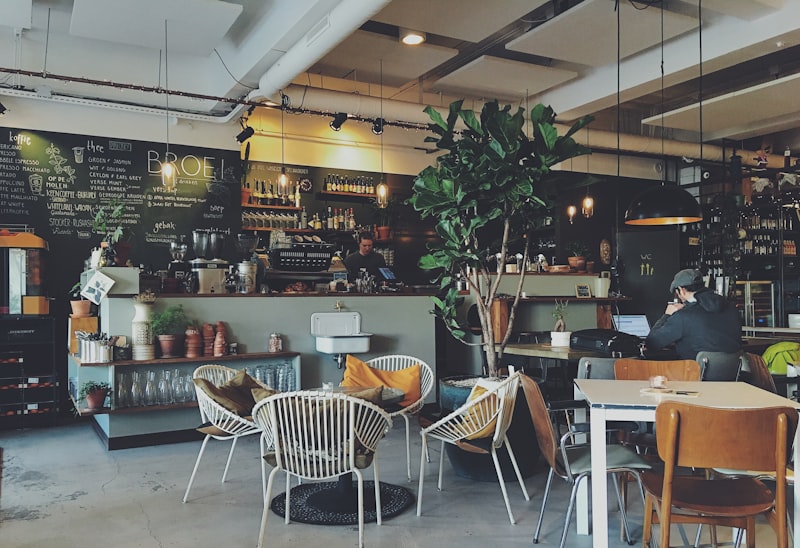
OMF Japan describes Iris Café as a low-pressure space where people engage with faith far more naturally than they would stepping into a church. The bridge model — documented and working in Japan.
Read the OMF article →
Chino, CA → Saitama, Japan
Cafe for Christ partners with local churches to build cafés for their ministry and outreach — meeting people where they are, in spaces they already trust.
Worship with us in Chino, CA →
This wasn't where we planned to start — but Mustard Seed Church in Saitama reached out, asked if we could help them open a café for their ministry and outreach, and we said yes. That's how this began. And what we've seen since has only made us more sure.
We're helping Mustard Seed Church in Saitama build and open a café inside their building — a space for the church's own gatherings and events, and for the outreach and community events that let the neighborhood meet the church naturally.
Most people in Japan won't walk into a church. A good café hosting an outreach or community event? They will. This project gives Mustard Seed a front door the neighborhood will use — long before they'd ever step into a Sunday service.
We're not writing a check and walking away. We're in it — sourcing equipment, helping plan the space, and making sure the structure is there so the café can actually run well.
God has been faithful to get us this far — and we're already looking ahead. As we explore where a second café might open next, the need for support never really stops. Here's an honest look at what's been provided for Saitama, and where we still need help.
Funds raised to cover the minimum improvements needed to open the church space as a functioning neighborhood café.
Basic construction and renovation to get the physical space open and functional — the essentials, not the finish work.
Most major equipment is in hand — espresso machine, grinders, brewing gear, and more.
This fall, Pastor Samuel Oh will spend a season on the ground in Saitama as a short-term missionary — helping launch the pilot café and laying the groundwork for church-planting outreach alongside Mustard Seed Church. Travel, housing, and on-the-ground support are still needed.
Beans, cups, syrups, napkins — all the everyday products a working café goes through. This is an ongoing cost, not a one-time one, and it keeps the doors open.
Clean, consistent water is essential for good coffee — and for the equipment itself. A proper filtration system is still needed.
The space will open with the basics covered, but still needs further upgrades — better furniture, seating, and finishing touches to make it a place people actually want to linger.
We're already exploring a second café site. Funding now doesn't just sustain Saitama — it helps us move when God opens the next door.
After many years of pastoring, Samuel Oh has felt a growing burden for Japan — a nation with deep spiritual need and few laborers to meet it. Less than 1% of Japan's population identifies as Christian, and entire communities remain without a gospel witness nearby.
This fall, Sam will travel to Saitama to help launch our pilot café ministry — a space built to create genuine connection in a culture often marked by isolation, and to open doors for the gospel in everyday life. Alongside our partners at Mustard Seed Church, he'll spend this season on the ground: building relationships, learning the neighborhood, and laying the groundwork for a church plant that can reach people who might never walk into a traditional church.
We believe God is opening a door — and we're asking our church family to help send him. Your prayer and support make this pilot possible.
We gather twice a month for worship, prayer, and community. Everyone is welcome — whether you're curious, committed, or somewhere in between. Come as you are.

Cafe for Christ is a ministry built around a simple idea: hospitality opens the door that argument cannot. We partner with local churches to build cafés for their ministry — practical spaces that host church events and the outreach that meets people where they already are.
We bring together café operators, pastoral teams, and an oversight structure — making sure each one can do their job without carrying someone else's. Role separation from day one. The café runs like a café. The church is led like a church.
Saitama, Japan is where this starts. Mustard Seed Church is our first partner, and this is our first step.
And we believe hospitality doesn't stop at coffee. See where we believe God is leading us next →
Coffee shops will always be at the heart of what we do. But as we've prayed and planned, we've felt a growing conviction that our calling is bigger than coffee alone — and that CAFE can stand for more than one thing.
In Japan, a real and often hidden number of children grow up in poverty — eating alone, in a culture where hunger is rarely spoken about out loud. Communities across the country have responded with kodomo shokudo, "children's cafeterias" — grassroots dining rooms that offer struggling kids a hot meal, a safe seat at the table, and often the only warm conversation in their day. We didn't start this movement, and we won't be the ones to lead it — but we want to come alongside it.
Cafés built inside local churches — a low-pressure front door for the neighborhood, and the main way we open doors for the gospel. This is still the heart of Cafe for Christ, starting with Mustard Seed Church in Saitama.
Alongside the coffee shop model, we're beginning to explore how Cafe for Christ can support kodomo shokudo-style cafeterias — meeting the physical need of a disadvantaged child the same way our cafés meet the emotional and spiritual need of an isolated adult. Different tables, same mission: hospitality that opens a door.
Saitama is where we started — not where we stop. As God provides, our prayer is to see cafés, cafeterias, and gospel outreach take root in twelve places across Japan, from Hokkaido to Okinawa.

In Japan, walking into a church is a significant social act. Walking into a café isn't. OMF Japan describes café ministry as a non-intimidating space where people engage with faith far more naturally than they would in a church.[6]
A café doesn't replace a church. It makes the first step possible.
The average Japanese church has 35 members — faithful communities carrying real costs. A shared-space model changes that. When the café hosts the church's own events and outreach throughout the week — not just a Sunday service — the space earns its keep the other six days too, documented as roughly a 6-to-1 split by actual use.[8]
The church doesn't fund the café. The café makes the space viable for both.
Running a café is a full-time job. Leading a church is a full-time job. The goal is to protect both — and that means dedicated support for each role from the start.
The pastor preaches, disciples, and cares for people.
The operator runs the café with independent support.
Both do their actual job. From day one.
These aren't assumptions — they're documented. Every claim below is cited and linked.
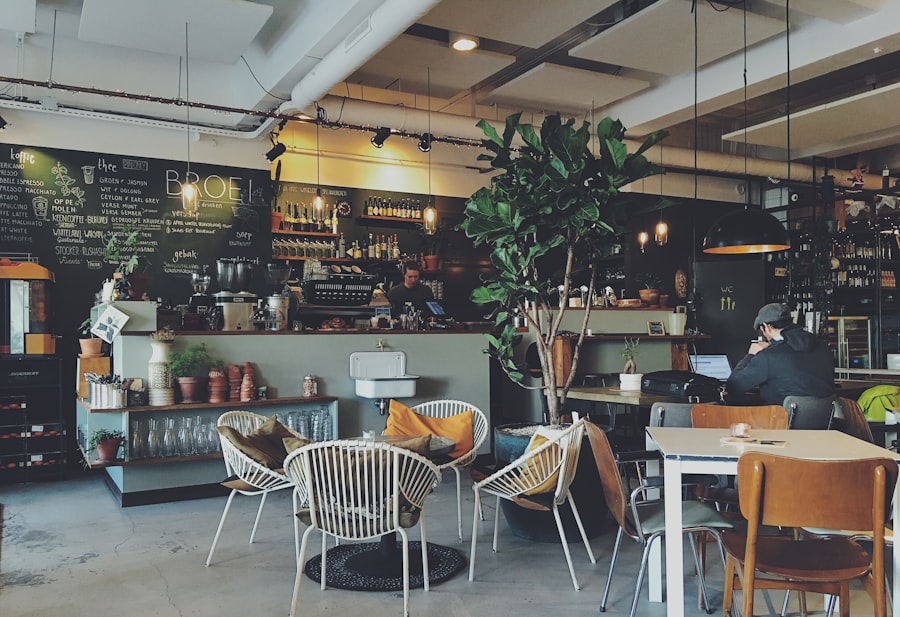
Most churches show up once a week. This space shows up for outreach and community events throughout the week, too.
A café built around regular outreach events creates something a Sunday service alone can't — familiarity, trust, and a reason to keep coming back. People meet the church at an event, in a space that already feels comfortable, long before anyone's asked them to believe anything.
When the church gathers in that same room for worship, the people who came for an outreach event already know it. The first-time barrier is already gone — not because of a program, but because they already belong to the space.
Not endorsements — documented cases. Linked so you can read them yourself.
OMF Japan
OMF Japan describes Iris Café as a low-pressure space where people engage with faith far more naturally than they would stepping into a church. The bridge model — documented and working in Japan.
Read the OMF article →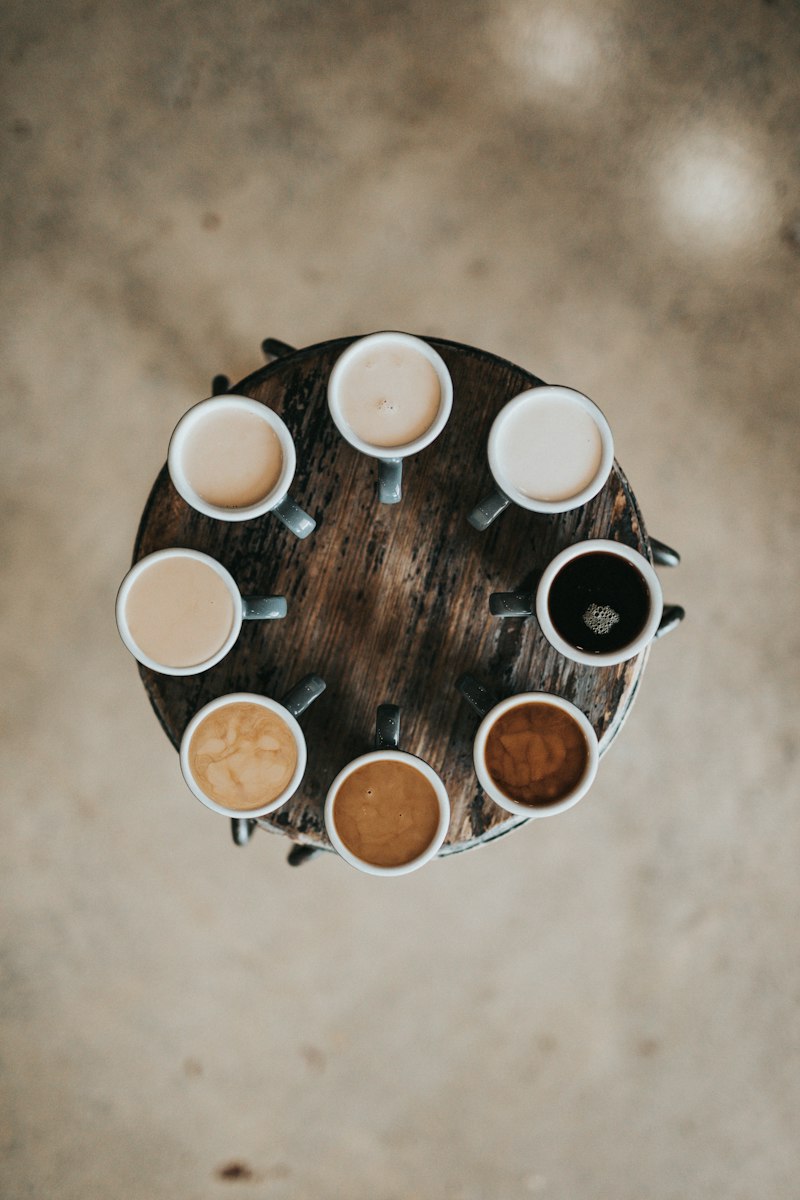 UCCJ — Sapporo
A Sapporo coffee shop opened in 1971 as an outreach space. People connected gradually, and a church grew from it — now part of the United Church of Christ in Japan.
Read the UCCJ account →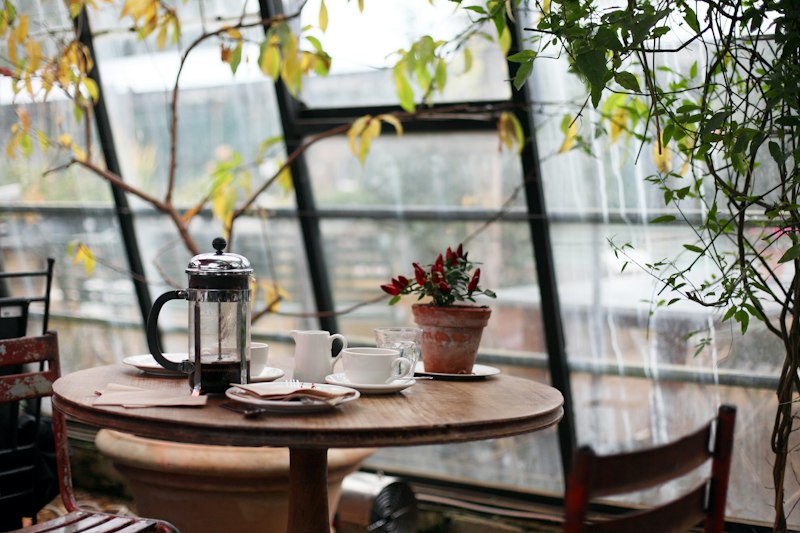 Exponential
Exponential laid out the lease model, the cost split, and — critically — why one person can't do both jobs. Honest about what goes wrong. Worth reading before you start.
Read the Exponential piece →Here's what we actually need and where your support goes.
Coffee, café workers, people willing to show up in Saitama. Every gift helps — whether it's recurring or a one-time gift.
Give NowThis fall, Samuel Oh is going to Saitama as a short-term missionary to help launch the pilot café and serve alongside Mustard Seed Church's outreach and missions. Your gift helps send him.
Give to This CampaignCoffee operations, design, Japanese, construction, teaching. If you have something specific to offer, tell us what it is and we'll find a fit.
Get in TouchMonthly updates from the field — what's working, what isn't, and what's next. No pitch. Just honest progress from Saitama.
SubscribeCafe for Christ is a ministry that helps local churches build cafés for their ministry and events — spaces the church uses for outreach and community events, so people can find the church in a space they already feel comfortable in. We're based in Chino, CA and our first project is in Saitama, Japan.
It's our first project — a café we're helping Mustard Seed Church open inside their building in Saitama. It's primarily a space for the church's own ministry and events, and through the outreach and community events they'll host there, it gives people a real, natural way to meet the church without the weight of walking into a service. Learn more about the project.
We use Zeffy. They don't take platform fees, so 100% of what you give goes directly to the mission. Give at zeffy.com →
We use a single, combined fund for everything: sending Samuel Oh to Japan this fall as a short-term missionary, everyday café supplies like beans and cups, a water filtration system, and furniture and upgrades to finish the space. And beyond Saitama, we're already exploring where a second café might open next. See the full funding breakdown.
We gather the 2nd and 4th Thursday of every month at 7:00 PM in Chino, CA. Contact us for the address.
About 71% of Japanese people have no religious connection, and Christians make up less than 1% of the population. Walking into a church in Japan carries real social weight. A café outreach event takes that away — people can meet the church on their own terms, and feel at home before anyone has asked them to commit to anything. See how the model works.
Yes — if you have skills in café operations, construction, teaching, or Japanese, we'd love to connect. Reach out and tell us what you can offer. Get in touch.
Samuel, along with the rest of our founding team, has been leading this from the beginning — the vision, the relationships, the work. This fall, he's traveling to Saitama as a short-term missionary to help launch the pilot café and work hands-on with Mustard Seed Church's outreach and missions. Give to send him →
Yes. If you're a church, organization, or serious donor and want to review our full proposal before partnering, email us and we'll send it over. hello@cafe4christ.org
Questions, partnerships, short-term interest, or giving — use the form or email us directly.
Email: hello@cafe4christ.org